
Flying needle tester
- TIME:2019-12-30
- View:56


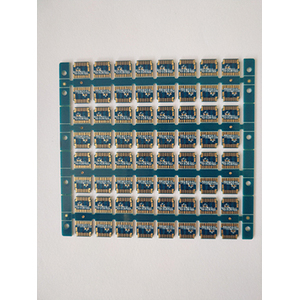
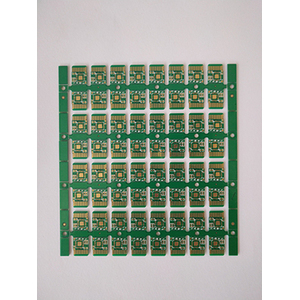
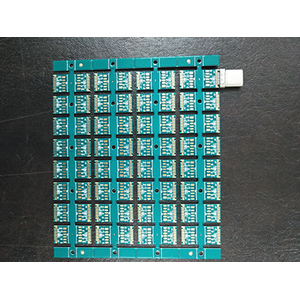
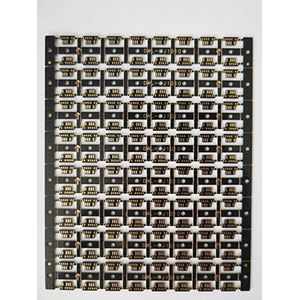
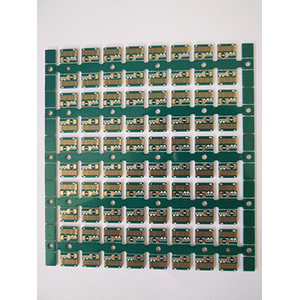
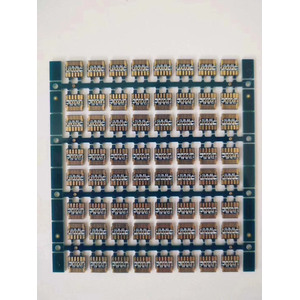
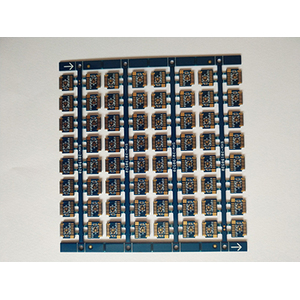
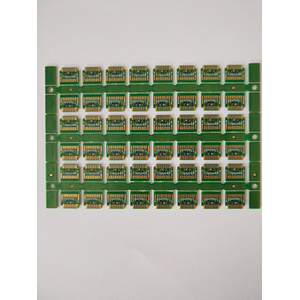
The flying pin tester is used to test circuit board, which is divided into two categories: one is to test PCB, the other is to test PCBA.
The flying pin tester for PCB testing is a kind of instrument for PCB (printed circuit board) with high density, many layers, high wiring density and small measuring point distance. It mainly tests the insulation and conduction value of PCB. Generally, the tester adopts "truth comparison positioning method", which can monitor the test process and fault point in real time to ensure the accuracy of the test.
The flying pin tester for PCBA mainly tests the electrical properties of electronic components such as values and electrical characteristics;
The flying needle testing machine has the characteristics of fine pitch, not limited by grid, flexible testing and fast speed.
Flying pin tester is a system for testing PCB in manufacturing environment. Instead of using all the traditional bed of nails interfaces on the traditional on-line tester, the flying pin test uses four to eight independently controlled probes to move to the components in the test. The UUT (unit under test) is delivered to the tester by belt or other UUT transmission system. Then, the probe of the tester contacts the test pad and via to test the single element of the UUT. The test probe is connected to the driver (signal generator, power supply, etc.) and sensor (digital multimeter, frequency counter, etc.) through the multiplex system to test the components on the UUT. When one element is being tested, other elements on the UUT are electrically shielded by the probe to prevent reading interference (Figure 1).
Flying pin tester can check short circuit, open circuit and element value. A camera is also used on the flyer test to help locate missing components. Use a camera to check directional component shapes, such as polarity capacitance. With the probe positioning accuracy and repeatability reaching the range of 5-15 μ m, the flying probe tester can accurately detect UUT.
Flying pin test solves a lot of existing problems in PCB assembly, such as the lack of golden standard board in development. Problems also include a test development cycle that can be as long as 4-6 weeks; a fixture development cost of about $10000 - $50000; the inability to economically test low volume production; and the inability to quickly test prototype assembly. These situations show that the traditional needle bed testing machine is lack of low-cost system for testing low output; lack of rapid test coverage for prototype assembly; and can not test to shielded assembly.
Because of the ability of close contact with shielded UUT and the ability to help get to the market faster, flying pin test is an invaluable production resource. Moreover, because there is no need for experienced test and development engineers, the system can be considered as a labor-saving equipment with added value and time saving benefits.
- Company profile
- Company profile
- Contact us
- Product display
- PCB products
- pcba products
- 技术支持
- Contact us
- 圳市宝安区福海街道和平社区同富裕工业区东震包装有限公司厂房整套第五栋第一层 Floor 1, building 5, factory building, Dongzhen Packaging Co., Ltd., tongfuyu Industrial Zone, Heping community, Fuhai street, Bao'an District, Shenzhen
- TEL: 13534217231
- Message feedback
